Fend
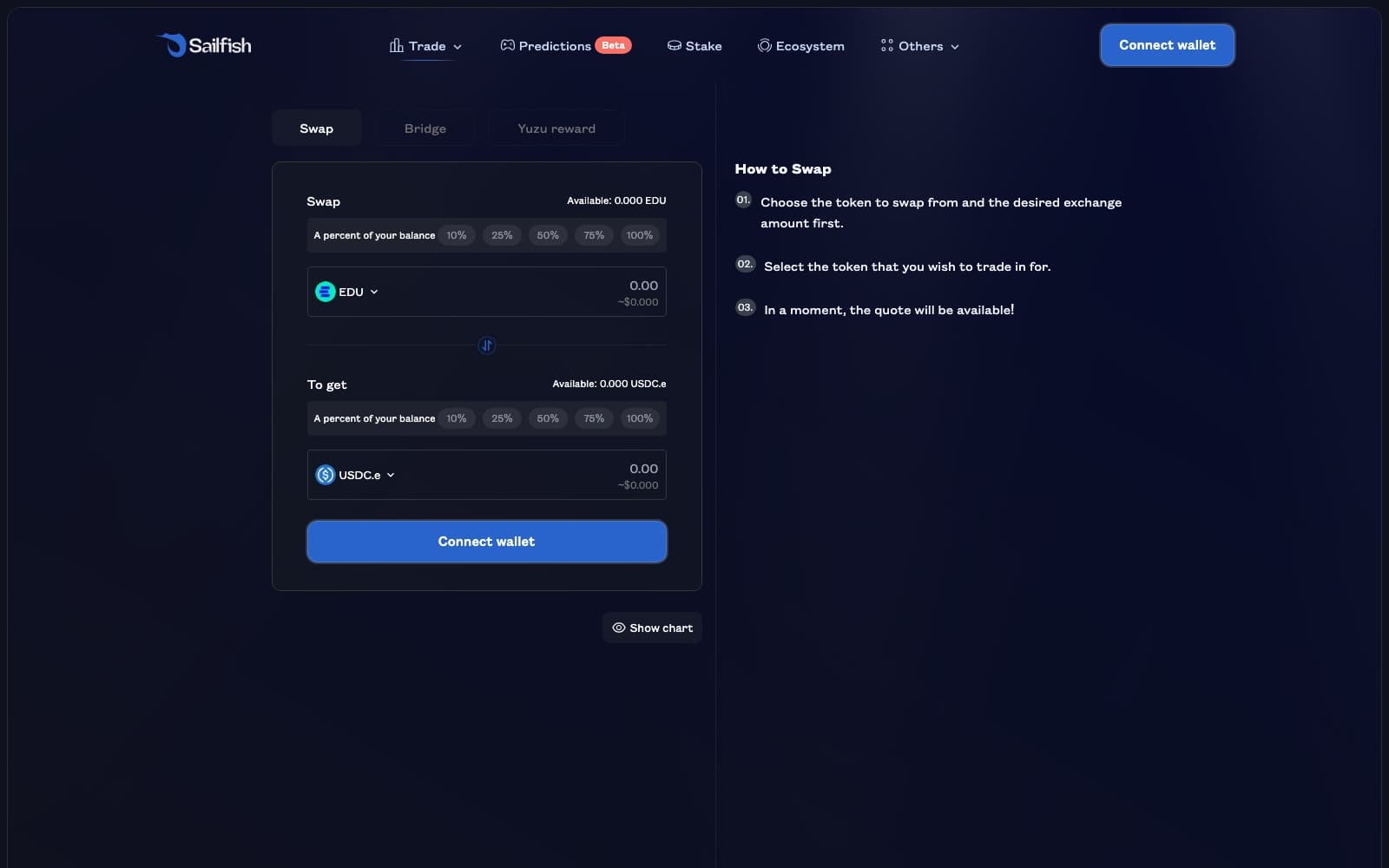
Sailfish, Thrustpad, and the tooling around them
On-chain infrastructure behind Sailfish (a DEX), Thrustpad (a launchpad), and PrepMe Academy — token creation, staking, airdrops, locking, bridging, and the SDKs and analytics that hold it all together.
My Role
Software Engineer
I built and maintained infrastructure for Sailfish and Thrustpad, alongside SDKs, analytics, bridging, and on-chain growth tooling.
The Problem
A decentralized exchange lives or dies on trust and throughput. Fend needed infrastructure that could move serious on-chain volume reliably, onboard non-crypto-native users without friction, and give the team real visibility into what was happening across chains.
Research
Sailfish, Thrustpad, and the Community Faucet started as EDU Chain Hackathon builds — my team won the DeFi, Tool, and Miscellaneous tracks in Semester 1, and PrepMe followed as a Semester 2 finalist. Fend Group took them from hackathon prototypes to real, shipped products. Working across EVM chains and Aptos, I mapped where users dropped off and where the platform lost transparency. The pattern was clear: onboarding friction and opaque on-chain state were the two biggest drags on growth. Better UX and better observability would move the needle more than any single feature.
Approach
I built and maintained the infrastructure behind Sailfish (the DEX) and Thrustpad (a full launchpad — token creation, staking, airdrops, and locking mechanisms), plus PrepMe Academy, an EdTech platform with on-chain rewards for students. Underneath sat the internal tooling that made all of it usable: SDKs, bridging infrastructure, crypto faucets, and on-chain analytics pipelines. Growth systems like referrals and leaderboards turned usage into retention.
SDKs to standardize on-chain access
Rather than re-implementing chain logic per surface, I built SDKs so mobile, web, and internal tools shared one reliable path to the chain — fewer bugs, faster features.
Analytics pipelines for transparency
On-chain data is public but unreadable. I designed pipelines that turned raw transactions into transparent, trackable insight for both the team and users.
An on-chain bridge to Educhain
I built a bridge onto Educhain that brought new users into the ecosystem and helped move over 1M+ EDU onto the chain — making it easy to get assets where they needed to be.
Growth loops baked into the product
Referral systems, leaderboards, and tracking weren't bolt-ons — they were designed into the core flows, which is how the platform scaled from hundreds to thousands of active users.
Challenges
Cross-chain is unforgiving. Bridging assets and keeping state consistent across EVM, Aptos, and Educhain meant designing for partial failure everywhere — retries, idempotency, and reconciliation so a hiccup on one chain never corrupted the user's view of their funds.
Outcome
The infrastructure processed over $100M in on-chain volume across Sailfish and Thrustpad and helped grow the platform from hundreds to thousands of active users, with a launchpad and community layer built on top.
Reflection
Crypto's hard problems are mostly distributed-systems problems in disguise. The wins came from boring reliability — SDKs, analytics, reconciliation — not from chasing the flashiest feature.
Let's talk
Have an ambitious idea? Let's turn it into a product.
Whether it's a fintech platform, a developer tool, or an AI-powered experience — I love helping teams ship things people enjoy using.